
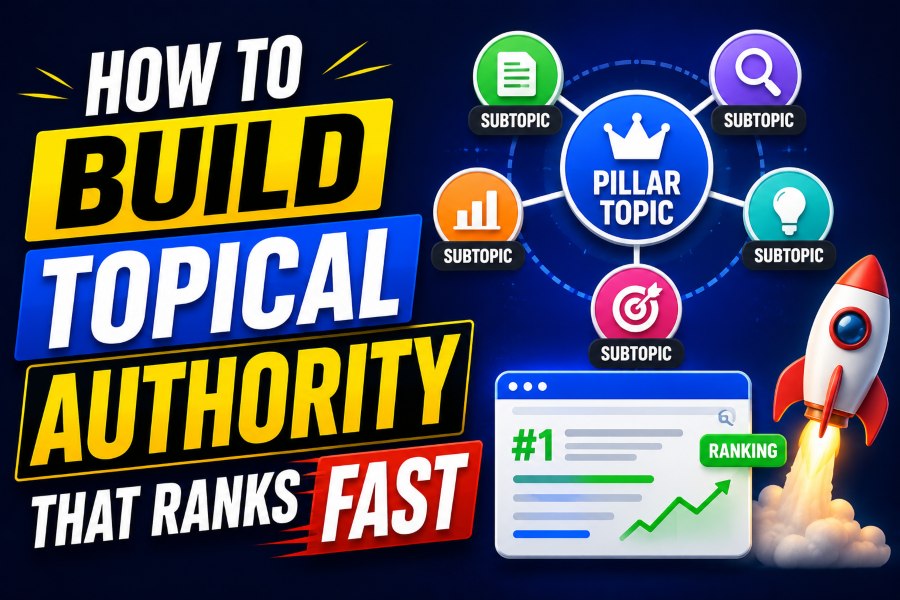
How to build topical authority is one of the most important questions in modern SEO because Google now rewards websites that demonstrate depth, relevance, and expertise across a subject. If your site only publishes random articles without a clear content structure, search engines struggle to understand your expertise and readers often leave without exploring more pages.
This guide explains how you can build real topical authority with content clusters, internal linking, audience-focused keyword research, and strategic publishing that improves rankings and user trust at the same time.
Understand What Topical Authority Really Means
Topical authority refers to your website’s ability to cover a subject comprehensively while proving expertise through helpful, connected content. Google evaluates how well your pages answer related questions, how deeply you cover a topic, and whether users engage with your content over time.
You build authority when your articles support each other naturally instead of competing for the same keyword. Many website owners publish isolated blog posts, but strong topical authority comes from creating interconnected pages that guide readers from broad concepts into deeper discussions.
A smart internal linking system improves this process because search engines can crawl your pages more efficiently while readers discover more relevant content naturally. Many publishers now use tools that make internal linking for wordpress simple because organized internal linking helps distribute authority across multiple pages and strengthens topic relationships without making the workflow complicated.
Start With One Core Topic Instead Of Many
Many websites fail because they try to cover too many unrelated subjects at the same time. When you focus on one clear niche first, Google begins associating your domain with expertise in that specific area, which improves ranking potential for connected keywords.
For example, a website about SEO should not suddenly publish random articles about gaming, recipes, or cryptocurrency trends unless those topics connect naturally to the audience. Consistency creates trust signals for both readers and search engines because your content becomes easier to understand and categorize.
You should begin by selecting one broad subject and identifying all the smaller questions users ask about it online. This approach allows you to create supporting content that strengthens your pillar pages while gradually expanding your authority across the entire topic.
Build Content Clusters Around Search Intent
Content clusters help you organize articles in a way that reflects how people search online. Instead of targeting only one competitive keyword, you create a pillar page and multiple supporting pages that answer related questions in greater detail.
A strong cluster improves user experience because readers can move naturally between beginner and advanced topics without leaving your website. Many SEO professionals also take control of your website internal linking strategies because properly connected cluster pages help search engines understand topic relationships and distribute authority more effectively.
You should map your clusters based on search intent rather than keyword volume alone because intent reveals what users truly want. Informational searches, commercial searches, and problem-solving searches all require different content structures, and aligning your pages with those goals improves engagement significantly.
Create Pillar Pages That Cover Broad Topics
A pillar page acts as the foundation of your topical authority strategy because it introduces the broader subject while linking to supporting articles. These pages should answer major questions clearly while encouraging readers to continue exploring related content across your website.
Your pillar content should remain evergreen because it serves as a long-term authority asset rather than a temporary traffic page. Many SEO teams also use systems that discover internal linking opportunities because identifying relevant supporting pages manually becomes difficult as content libraries grow larger over time.
A strong pillar page should include definitions, frameworks, examples, and references to related subtopics without overwhelming readers. When your supporting pages link back to the pillar naturally, you create a network that strengthens authority signals across the entire cluster.
Focus On Keyword Relationships Instead Of Single Keywords
Modern SEO is no longer about repeating one keyword excessively across a page. Search engines now analyze semantic relationships, contextual relevance, and topic depth to determine whether your content truly satisfies user intent.
You should group keywords based on relevance instead of treating each phrase as a separate campaign. Articles targeting related terms such as “content clusters,” “SEO authority,” “internal linking,” and “topic relevance” can support each other naturally when organized correctly.
This strategy also reduces keyword cannibalization because each article serves a distinct purpose within the cluster. Instead of competing against your own pages, your content works together to strengthen your website’s overall authority in the niche.
Write Content That Solves Specific Problems
Readers stay longer on websites that provide direct, actionable answers instead of vague general advice. Google measures user behavior signals such as engagement, dwell time, and interaction patterns, so practical content often performs better than surface-level articles filled with fluff.
You should identify the exact challenges your audience faces before creating content ideas. Forums, search suggestions, social media discussions, and competitor gaps reveal the kinds of questions users still struggle to answer online.
Problem-solving content also attracts natural backlinks because useful resources earn references from bloggers, marketers, and publishers more consistently. When your articles genuinely help readers accomplish something important, your authority grows naturally over time.
Build A Consistent Publishing Structure
Consistency matters more than publishing large amounts of content quickly. Search engines prefer websites that demonstrate ongoing expertise through regular updates rather than short periods of intense activity followed by months of silence.
You should create a realistic publishing schedule that allows you to maintain quality across every article. Many successful websites grow authority steadily by publishing two or three strong pieces each month instead of rushing dozens of weak pages online.
Consistency also improves audience trust because readers begin expecting valuable updates from your website regularly. Over time, this behavior increases return visits, improves brand familiarity, and strengthens long-term SEO performance.
Improve Internal Linking Across Your Website
Internal linking helps readers navigate your website while guiding search engines toward your most valuable pages. Every relevant article should connect naturally to supporting content so authority flows throughout the site instead of remaining isolated.
Context matters when adding internal links because random anchor placement weakens readability and user trust. The surrounding sentences should explain the relevance of the linked page clearly while helping readers understand why the additional information matters.
Strong internal linking also improves indexing efficiency because search engines discover new pages faster through connected content. As your website grows, organized internal links become essential for maintaining a clean topical structure.
Update Older Articles Regularly
Many website owners focus only on publishing new content while ignoring older articles completely. Updating existing pages often produces faster SEO improvements because search engines already recognize those URLs and can reassess their relevance quickly.
You should refresh outdated statistics, improve readability, add new examples, and strengthen internal linking whenever necessary. Small improvements across older pages can significantly increase traffic because freshness signals influence rankings in many competitive niches.
Updating content also helps maintain topical accuracy because industries evolve constantly. Readers trust websites that provide current insights rather than outdated advice that no longer reflects real-world conditions.
Use Data And Examples To Build Credibility
Search engines increasingly reward content that demonstrates expertise through evidence, examples, and useful analysis. Including real data, case studies, and practical demonstrations makes your content more trustworthy and easier for readers to understand.
For example, studies consistently show that longer, structured content with strong internal linking often performs better in competitive search results because it covers topics more comprehensively. Real examples also make complex SEO strategies easier to apply because readers can visualize how the process works in practice.
Credibility improves engagement because readers are more likely to trust recommendations supported by experience and evidence. Strong trust signals encourage users to spend more time exploring your content ecosystem.
Avoid Thin Content And Topic Overlap
Thin content weakens topical authority because shallow pages rarely satisfy user intent fully. Publishing dozens of short, repetitive articles often creates confusion for search engines while reducing the overall quality of your website.
You should merge overlapping content whenever multiple pages target nearly identical intent. Consolidating weak articles into stronger resources improves readability, strengthens authority signals, and reduces keyword cannibalization issues.
A focused content structure performs better because every page serves a clear purpose within the broader topical strategy. Strong authority grows when each article contributes unique value instead of repeating information already available elsewhere on your site.
Measure Performance And Expand Strategically
Building topical authority requires continuous analysis because SEO performance changes over time. You should monitor rankings, organic traffic, engagement metrics, and internal link performance to identify which clusters generate the strongest results.
Once one topic area performs consistently, you can gradually expand into closely related subjects without weakening your niche relevance. Strategic expansion allows your website to grow naturally while maintaining the expertise signals that helped establish authority initially.
Successful topical authority is not built overnight because trust develops through consistent quality, structured content, and strong user experience. The websites dominating competitive search results usually succeed because they cover topics deeply while maintaining organization across their entire content ecosystem.
Conclusion
How to build topical authority successfully depends on your ability to create connected, useful, and deeply relevant content that serves readers better than competing websites.
When you focus on one niche, organize content into clusters, strengthen internal linking, and update pages consistently, your website becomes easier for Google to understand and more valuable for users to explore.
Strong topical authority also improves trust, increases engagement, and creates sustainable organic traffic growth that continues long after individual articles are published.