
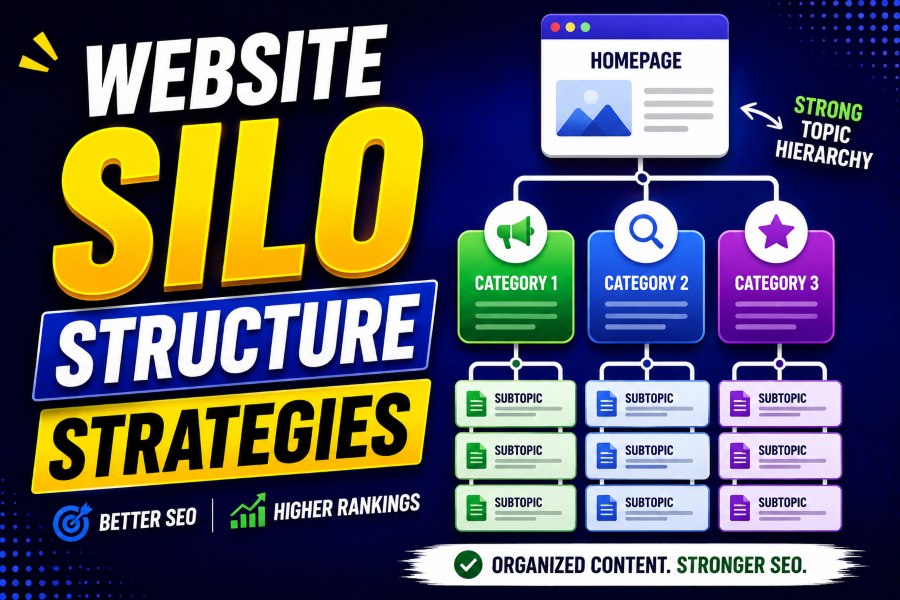
Website silo structure is one of the smartest ways to organize your content for readers and search engines at the same time. When your pages are grouped into clear topic categories, Google understands your expertise faster and users navigate your site with less confusion. A strong silo system also improves internal linking, distributes authority naturally, and increases the chances of ranking multiple pages for related search queries.
Many websites fail because their content feels disconnected, even when the articles themselves are useful. You can avoid that problem by building logical content relationships that support your main topics and guide visitors toward deeper engagement. This guide explains how to build a practical website silo structure that improves rankings, strengthens topical authority, and creates a better experience for your audience.
What A Website Silo Structure Really Means
A website silo structure organizes your content into grouped categories that focus on a single subject area. Instead of publishing unrelated pages randomly, you connect pages that belong to the same topic cluster and support a central parent page. This structure helps search engines understand context, relationships, and authority across your website.
Many SEO professionals use silo structures because they reduce confusion for both crawlers and users. Modern websites often contain hundreds of pages, so clear organization becomes essential for indexing and ranking performance. Tools that simplify internal linking for WordPress can also help you connect related articles naturally while keeping your site architecture organized and scalable.
A strong silo system creates a predictable navigation path that improves user trust and engagement. Readers can move from broad information into more detailed subtopics without feeling lost. This flow increases time on site and supports stronger conversion opportunities across important pages.
Why Search Engines Prefer Organized Content
Google wants to rank pages that clearly demonstrate expertise on a subject. When your pages are tightly connected around related themes, your site sends stronger topical relevance signals to search engines. This makes it easier for algorithms to understand what your website represents.
Disorganized websites usually suffer from keyword cannibalization and weak internal authority distribution. Several pages may compete for similar keywords without supporting one another effectively. A silo structure solves this issue by assigning clear roles to parent pages, supporting articles, and conversion-focused pages.
Search engines also benefit from improved crawl efficiency when your architecture follows logical pathways. Bots can discover and index new pages faster because each section of the site connects naturally to related content. Over time, this improves visibility for both competitive and long-tail keywords.
How Internal Linking Strengthens Topic Authority
Internal links are the foundation of every successful website silo structure. Each link acts like a signal that tells search engines which pages belong together and which pages deserve more authority. Strategic internal linking also guides readers toward useful supporting information.
Many site owners overlook the importance of consistent linking patterns between related pages. A focused structure allows you to take control of your website internal linking while improving user navigation and supporting important service or product pages. When links appear naturally inside valuable content, readers engage more confidently with your website.
Internal links should always serve a purpose instead of existing purely for SEO. Each connection should help users discover deeper information related to the topic they already care about. This creates a more satisfying browsing experience and strengthens topical relationships across your content network.
The Difference Between Hard And Soft Silos
Hard silos focus on physical site structure and URL hierarchy. Pages are grouped into folders and subfolders that reflect category relationships, which creates a clean organizational system for both users and crawlers. This structure often appears in ecommerce stores, service businesses, and large editorial websites.
Soft silos rely more heavily on internal linking and contextual relationships between pages. You may keep flexible URL structures while still helping search engines discover internal linking opportunities that connect related content clusters naturally. This approach works well for blogs and content-heavy websites that publish regularly.
Both methods can produce excellent SEO results when implemented correctly. The best choice depends on your website size, publishing strategy, and long-term scalability goals. Many successful websites combine hard and soft silo techniques for stronger organization and flexibility.
How To Build Parent And Child Pages
Parent pages target broader keywords that represent major topics within your niche. These pages provide foundational information while linking to supporting child pages that answer narrower questions or cover specialized subtopics. This structure creates clear topical depth across your website.
Child pages should expand naturally on themes introduced within the parent page. For example, a digital marketing parent page may connect to articles about technical SEO, content optimization, and internal linking strategies. Each supporting page strengthens the authority of the parent topic through contextual relevance.
Your hierarchy should remain logical and easy to navigate for real users. Visitors should understand where they are within the site structure without relying heavily on search features. Simple navigation improves usability and increases page discovery rates.
Common Mistakes That Destroy Silo Structures
One major mistake involves linking unrelated pages together excessively. Random internal links dilute topical relevance and confuse search engines about the true focus of your content sections. Every link should reinforce a meaningful relationship between connected pages.
Another problem occurs when websites create too many categories with thin content. Empty silos weaken authority signals because search engines prefer substantial topical coverage. Each silo should contain enough supporting content to demonstrate expertise and usefulness.
Poor anchor text usage also damages internal linking performance. Generic phrases like “click here” provide little contextual value for readers or crawlers. Descriptive anchor text improves clarity while helping search engines understand page relationships more effectively.
How Silo Structures Improve User Experience
A website silo structure improves user experience by reducing friction during navigation. Visitors can move logically from broad information into detailed content without feeling overwhelmed or confused. This encourages longer browsing sessions and stronger trust in your website.
Users often leave websites that feel chaotic or difficult to understand. Clear content pathways create a sense of structure that helps readers find answers quickly and confidently. This becomes especially important on large websites with extensive content libraries.
Good navigation also improves conversion potential across important pages. When readers encounter related content naturally, they remain engaged with your brand longer. That engagement increases opportunities for subscriptions, inquiries, purchases, and repeat visits.
The Role Of Keyword Research In Silos
Effective silo structures begin with strong keyword research. You must identify broad categories first before mapping supporting long-tail keywords underneath each main topic. This creates a clear framework for future content development.
Keyword grouping helps prevent overlap between articles targeting similar phrases. Instead of competing against yourself, each page receives a unique purpose within the broader content ecosystem. This approach improves ranking efficiency and content clarity.
Long-tail keywords often perform especially well inside silo structures because they align naturally with supporting pages. These terms usually attract targeted traffic with stronger engagement and conversion potential. Over time, clusters of optimized supporting pages strengthen the authority of the parent topic.
Why Local SEO Websites Benefit From Silos
Local businesses often manage multiple service pages and geographic targets simultaneously. Without organization, these pages become difficult for users and search engines to navigate effectively. A silo structure helps separate services, locations, and supporting informational content clearly.
For example, a law firm may create separate silos for family law, personal injury, and estate planning services. Each category can then contain city-specific pages and supporting educational content that reinforces topical expertise. This structure improves relevance for local search queries.
Local SEO also benefits from stronger internal authority flow between related pages. When location pages connect naturally with supporting informational resources, users gain better context and confidence. Search engines also receive clearer signals regarding service relevance and geographic focus.
How Many Pages Should A Silo Contain
Most effective silos contain enough pages to demonstrate expertise without overwhelming users. A small business website may succeed with four to ten tightly connected pages inside each category. Larger publishers often expand silos gradually as topical coverage increases.
Quality matters more than volume when building content clusters. Publishing dozens of shallow articles rarely produces strong SEO results because search engines prioritize usefulness and depth. Each page should contribute meaningful value to the overall topic.
You should also leave room for future expansion when planning your structure. New supporting articles should fit naturally into existing silos without forcing unnecessary categories. Flexible planning helps your architecture remain scalable over time.
Measuring The Success Of Your Silo Structure
You can evaluate silo performance using several SEO and engagement metrics. Organic traffic growth, ranking improvements, crawl efficiency, and average session duration all reveal whether your structure supports user intent effectively. Stronger internal linking often produces noticeable improvements within a few months.
Search Console data can also reveal whether related pages begin ranking for connected keyword themes. Increased visibility across long-tail searches often indicates stronger topical authority. Monitoring crawl coverage helps identify orphan pages or structural weaknesses that require adjustments.
User behavior metrics remain equally important when analyzing results. Lower bounce rates and higher page-per-session numbers usually suggest that visitors find your navigation helpful. These signals support long-term SEO growth and stronger website performance.
Future Trends In Website Architecture And SEO
Search engines continue moving toward semantic understanding and entity-based relevance. This means websites with strong topical organization will likely gain even greater advantages in future search results. Structured content ecosystems already outperform scattered publishing strategies in many industries.
Artificial intelligence also increases the importance of contextual relationships between pages. Search engines now evaluate how thoroughly websites cover subjects instead of focusing only on isolated keywords. A well-planned website silo structure supports this evolution naturally.
Future-proof websites prioritize clarity, topical depth, and intuitive navigation. Businesses that invest in organized architecture today position themselves for stronger visibility and authority tomorrow. As competition increases online, structured content systems will become even more valuable.
Conclusion
Website silo structure remains one of the most effective ways to improve SEO, user experience, and long-term topical authority. When your content follows a logical hierarchy supported by meaningful internal links, search engines understand your expertise more clearly and users navigate your website with greater confidence. This combination creates stronger rankings, improved engagement, and better conversion opportunities across important pages.
You do not need a massive website to benefit from silo architecture because even smaller websites gain advantages from organized content relationships. The key is consistency, strategic planning, and thoughtful internal linking that supports real user intent. When you build content clusters around focused themes, your website becomes easier to crawl, easier to trust, and easier to rank competitively in search results.