
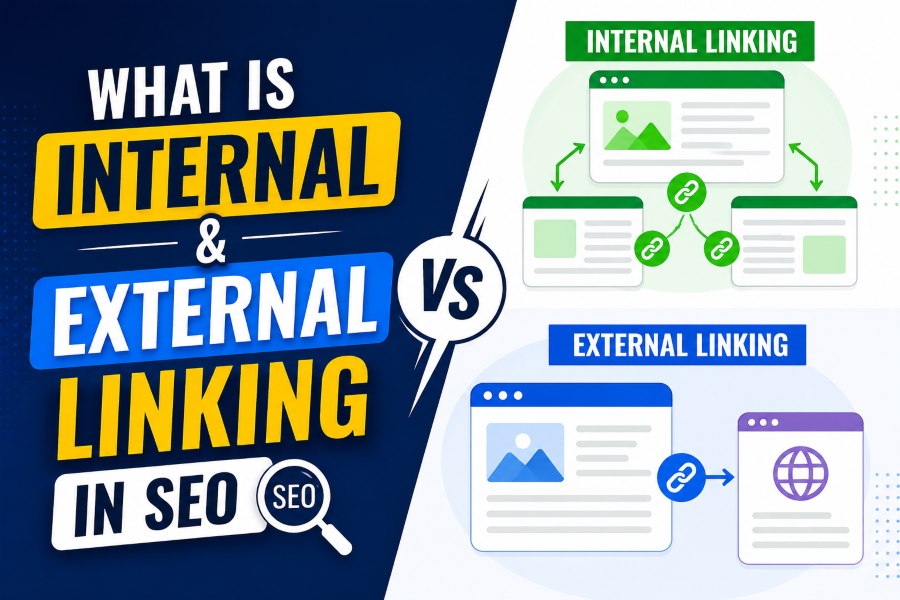
What is internal and external linking in SEO, and why does it matter for your website growth? Many website owners focus heavily on keywords and content creation, yet they overlook how links shape user experience, search visibility, and page authority across an entire website.
When you understand how internal and external links work together, you create a stronger content structure that improves rankings, boosts engagement, and helps search engines better understand your pages.
Understanding Internal Linking In SEO
Internal linking connects one page on your website to another page within the same domain. These links help users move naturally between related topics while guiding search engines toward important pages that deserve more visibility and authority.
A strong internal linking strategy improves navigation, increases page views, and distributes ranking power across your website. Many high-performing websites rely on structured linking systems because they help search engines crawl content faster and understand the relationship between different pages.
Website owners often struggle to organize growing content libraries, which is why tools that simplify internal linking in WordPress can automate link suggestions and improve site structure without disrupting the user experience. This process becomes even more valuable when your website contains hundreds of blog posts, landing pages, and educational resources.
Why Internal Links Matter
Internal links improve the flow of authority between pages. When one high-performing page links to another relevant page, some ranking strength passes through the connection and helps weaker pages gain visibility.
Internal links also keep readers engaged for longer periods. If visitors can easily find related information, they spend more time on your website and explore additional pages instead of leaving immediately after reading one article.
Understanding External Linking In SEO
External linking refers to links that point from your website to another website. These links help provide supporting information, establish credibility, and improve trust signals when they connect users to authoritative and relevant resources.
Search engines analyze external links because they help explain the context of your content. If your article references trustworthy sources that align with your topic, Google may view your content as more reliable and informative for readers.
External links should always feel natural within the content. Linking to low-quality or unrelated websites can confuse readers and reduce trust, which is why relevance matters more than quantity when using external references in SEO.
The Role Of Authority
Authoritative external links help support your claims and statistics. Readers are more likely to trust your information when they see connections to reliable sources that reinforce your explanations.
Google also evaluates topical relationships between linked pages. When your content consistently links to trustworthy industry resources, it strengthens your website’s perceived expertise within that niche.
What Is Internal And External Linking In SEO For Website Structure?
What is internal and external linking in SEO if not a way to create a logical structure for your content? Search engines use links to understand how pages relate to each other, which pages deserve more importance, and how visitors should navigate your website.
A website without proper internal links often leaves valuable pages isolated from search engine crawlers. Even high-quality articles may struggle to rank if they remain disconnected from the rest of the website structure.
Many businesses also use specialized systems to take control of your website internal linking because organized link management becomes increasingly difficult as content grows over time. Strategic linking helps websites maintain consistency while improving user navigation and content discoverability.
Building Topic Clusters
Topic clusters organize related content around a primary subject. One pillar page typically covers a broad topic, while supporting articles focus on specific subtopics connected through internal links.
This structure helps search engines understand topical depth. It also improves user experience because readers can move through related information without searching for additional resources manually.
Common Differences Between Internal And External Links
Internal and external links serve different purposes within SEO strategies. Internal links strengthen website structure and navigation, while external links build credibility and connect your content to wider industry conversations.
Internal links remain fully under your control because they point to your own pages. External links involve third-party websites, which means you should monitor them carefully to ensure they remain active and relevant over time.
Businesses that regularly audit content often discover internal linking opportunities by reviewing older articles and identifying pages that support newer content. This process improves content visibility while strengthening relationships between related pages across the website.
Key Differences To Remember
Here are the main differences between internal and external linking:
- Internal links connect pages within the same domain.
- External links point to separate websites.
- Internal links distribute authority across your site.
- External links improve credibility and trust.
- Internal links improve crawlability and structure.
- External links support content relevance and context.
How Internal Links Improve User Experience
Good internal links guide readers naturally through your content. Instead of forcing visitors to search for related information manually, internal links help them continue learning without interruptions.
Readers appreciate websites that feel organized and easy to navigate. When your articles connect logically, users remain engaged longer and interact with more content across your website.
Internal links also reduce bounce rates because visitors discover additional pages that match their interests. Search engines often interpret higher engagement as a sign that your website provides valuable and relevant information.
Smart Placement Matters
Internal links should appear naturally inside meaningful sentences. Overloading a page with excessive links creates confusion and weakens the user experience instead of improving it.
Anchor text should clearly explain what users can expect after clicking a link. Descriptive anchor text improves usability while helping search engines understand the linked page topic.
How External Links Build Trust And Relevance
External links help validate your content when they connect readers to trusted information sources. Well-placed references can strengthen your arguments and improve confidence in your expertise.
Google values websites that contribute to a broader information ecosystem. Linking to relevant industry sources demonstrates that your content supports readers rather than trapping them within a closed network of pages.
External links also improve topic relevance. When search engines see connections between your content and authoritative websites in the same niche, they gain stronger context about your article’s focus and quality.
Avoid Poor Linking Practices
Avoid linking to unrelated websites simply to add more external links. Search engines prioritize quality and relevance over volume when evaluating outbound linking behavior.
Broken external links also damage user experience. Regular audits help ensure that every linked page remains active, relevant, and trustworthy for readers.
Best Practices For Internal And External Linking
Effective linking strategies rely on balance, relevance, and user intent. Links should support readers naturally, rather than feel forced or overly optimized for search engines.
Use descriptive anchor text that clearly explains the linked page. Generic phrases such as “click here” offer little value to users or search engines because they fail to accurately describe the destination page.
You should also prioritize relevance when selecting linked pages. Internal and external links work best when they connect users to information that expands their understanding of the current topic.
Simple SEO Linking Tips
Follow these practical linking recommendations:
- Link to relevant supporting pages naturally.
- Keep anchor text clear and descriptive.
- Avoid excessive links within short paragraphs.
- Audit broken links regularly.
- Prioritize authoritative external sources.
- Connect older and newer content strategically.
Common Internal Linking Mistakes To Avoid
Many websites damage their SEO performance through poor internal linking habits. One common mistake involves linking too many pages with identical anchor text, which creates confusion for search engines.
Another issue occurs when important pages receive very few internal links. Search engines may interpret those pages as less valuable because they appear disconnected from the main content structure.
Some websites also place links randomly without considering user intent. Internal links should support the reader journey naturally instead of interrupting the flow of information.
Signs Your Linking Strategy Needs Improvement
Your internal linking structure may need attention if readers struggle to find related content. High bounce rates and low page depth often indicate weak navigation systems.
Search engines may also crawl your pages inefficiently if links remain inconsistent. Strong site architecture improves both user experience and technical SEO performance.
The Relationship Between Linking And SEO Rankings
Links remain one of the strongest ranking signals in modern SEO. Search engines use internal and external linking patterns to evaluate content quality, authority, and website structure.
Internal links help distribute ranking strength across your website, especially when powerful pages support weaker pages through relevant connections. External links reinforce credibility by connecting your content to trusted information sources within your industry.
Websites with organized linking systems often outperform competitors because they provide stronger navigation, clearer topic relationships, and better user engagement signals. This combination supports long-term SEO growth rather than short-term ranking spikes.
Why Strategy Matters
Random linking rarely produces meaningful SEO results. Every link should serve a purpose that benefits both readers and search engines simultaneously.
Strategic linking creates a smoother content journey. It also improves your website’s ability to rank for competitive keywords over time.
Conclusion
What is internal and external linking in SEO if not one of the foundations of effective website optimization? Internal links strengthen your site structure, improve navigation, and help search engines understand relationships between pages, while external links build trust, authority, and topical relevance for readers and search engines alike.
When you combine smart internal linking with relevant external references, your website becomes easier to navigate and more valuable to users searching for accurate information online. Strong linking strategies also improve crawlability, increase engagement, and support long-term ranking growth across multiple pages instead of relying on isolated content performance.
The most successful websites treat linking as part of the user experience rather than a technical afterthought. If you focus on relevance, clarity, and natural placement, both internal and external links can become powerful SEO assets that strengthen your content strategy over time.